Day 2
two days in a row now, yoga after baby's bedtime.
Tonight, a 30m Ashtanga flow.
Yesterday, a 60m modified ashtanga with focus on the pelvic floor.
Restorative yoga is always in my back pocket.
Morning sun salutation shape my day.
My breath is growing long again.
My back is sore in the right places again.
My wrists ache, and remind me of my resumed practice.
12 months later, I feel restored. A shift.
Sunday, September 28, 2014

Saturday, May 7, 2011
Tuesday, September 14, 2010
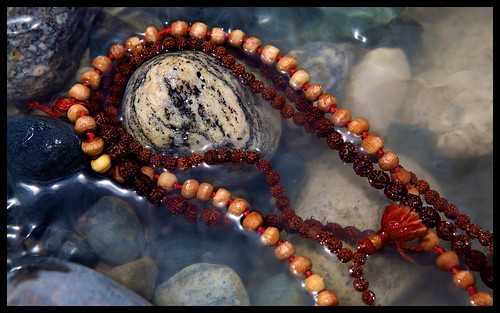
Shunya Mudra

This morning as I sat with Shunya Mudra, a lovely yoga song was playing in the background, on my "quiet yoga" playlist. Yet as I calmly brought my awareness to the Visshudha chakra, governing the throat, shoulders, mouth and ears, a dinging caught my attention, distracting me from my lovely meditations. I angrily wished that this song had been equalized properly, for this dinging was obviously doing no good!
Which brought my directly back to the purpose of this mudra.
Hearing problems are related to a person who is no longer able to hear or who even doesn't want to hear. This can be a blessing or a catastrophe. Poor hearing can protect us from unpleasant things or even from disagreeable sounds or information that find their way into us. On the other hand, we can also no longer hear beautiful things. Not wanting to hear is sometimes based on a particular kind of stubbornness that can lead to disaster. Consequently, if we are willing to scrutinize the reason for our hearing problems, this can lead us one step further toward a richer life.The middle finger is associated with the sky (ether). This is the gateway to the higher dimensions-the gateway to Heaven. The ancient myths say, if we want to get to Heaven, we first need to be thoroughly purified. This is why it may be appropriate to "look within" and make amends for old offenses.
So with yogi-like attention, I redirected my emotions to find gratitude for this song, at this moment, and its lessons in grace and acceptance.
Om Shanti Shanti Shanti
शान्ति
*image here
Hearing problems are related to a person who is no longer able to hear or who even doesn't want to hear. This can be a blessing or a catastrophe. Poor hearing can protect us from unpleasant things or even from disagreeable sounds or information that find their way into us. On the other hand, we can also no longer hear beautiful things. Not wanting to hear is sometimes based on a particular kind of stubbornness that can lead to disaster. Consequently, if we are willing to scrutinize the reason for our hearing problems, this can lead us one step further toward a richer life.The middle finger is associated with the sky (ether). This is the gateway to the higher dimensions-the gateway to Heaven. The ancient myths say, if we want to get to Heaven, we first need to be thoroughly purified. This is why it may be appropriate to "look within" and make amends for old offenses.
So with yogi-like attention, I redirected my emotions to find gratitude for this song, at this moment, and its lessons in grace and acceptance.
Om Shanti Shanti Shanti
शान्ति
*image here
Friday, July 23, 2010
Laurelhurst Park Yoga Sunday

This Sunday, 1pm I will be in Laurelhurst Park teaching a donation based vinyasa class! All levels welcome.
Focus is placed upon the energetic movement of the physical shapes in which we we find our bodies, and how that affects our breath, consciousness and everyday life.
This mixed level class is excellent for trying new postures and laughing. Beginners welcome! Grassy ground is a perfect place to challenge your balance, find your roots, and share a new experience.
Yoga mats optional, blankets/towels can be useful if damp.
**Location - usually near the duck pond! We'll try to find a shady spot if its hot.**
Please arrive a little early to find us
More info on the Meet Up website: meetup.com/yogapdx

Yogis love bikes!
Tuesday, July 20, 2010
shapes
Its amazing how bodies are designed to touch, lean, and move together.
I hope to see much more partner yoga in my future!
I hope to see much more partner yoga in my future!
Monday, July 19, 2010
Yoga with Alice
Tuesday and Thursday nights 7:30pm, I will be teaching Vinyasa at Yoga Bhoga!

I am so honored to join my beloved teachers in this space.
A huge wall of windows let in amazing summer sunlight, and the studio is so serene.
Portland, Oregon 97214

Thursday, July 15, 2010
Vipassana

"Vipassana, which means "to see things as they really are," is an ancient technique of meditation which was taught by Gautama the Buddha more than 2500 years ago as a universal remedy for human suffering, i.e., an Art of Living. It is the process of self-purification by self-observation. One begins by observing the natural breath to concentrate the mind. Then, with a sharpened awareness, one proceeds to observe the changing nature of body and mind and experiences the universal truths of impermanence, suffering and egolessness. This truth-realization by direct experience results in mental purification.
The technique is a universal remedy for universal problems and has nothing to do with any organized religion or sectarianism. It can be freely practiced by anyone without conflict due to race, community or religion, and will prove equally beneficial to one and all. You can find out more about the technique by visiting the international Vipassana Meditation Home Page."
I recently read an account of an experience at a Vipassana retreat. It is a 10 day retreat for beginners, with 2 meals provided, lodging (tents) and several hours-long closed eye meditation. Some people's experiences are intense! I have no idea if I would be able to keep it together. I went to a Buddhist meditation class once or twice, and kept nodding off. But by all accounts, this is an experience worth more than any teacher training, trip to India, or whatever floats your boat.
Just as I reflected this morning on my little meditation pillow, I should practice more. My semi-regular practice of 5 minute practices ground me, creating that sacred space in my life that is so hard to maintain sometimes. Soon, I will have more free time to devote to moving deeper within my practice, and finding a path that will support my inner and outer development.
Source: Oregon Vipassana Meditation
Subscribe to:
Posts (Atom)


